Touchscreen Guard vs. Interior PPF: What Each One Actually Protects (And What It Won't)
Touchscreen guards and interior PPF get bought like they're the same product. They're not — different material, different job, different surface. Here's the honest breakdown.
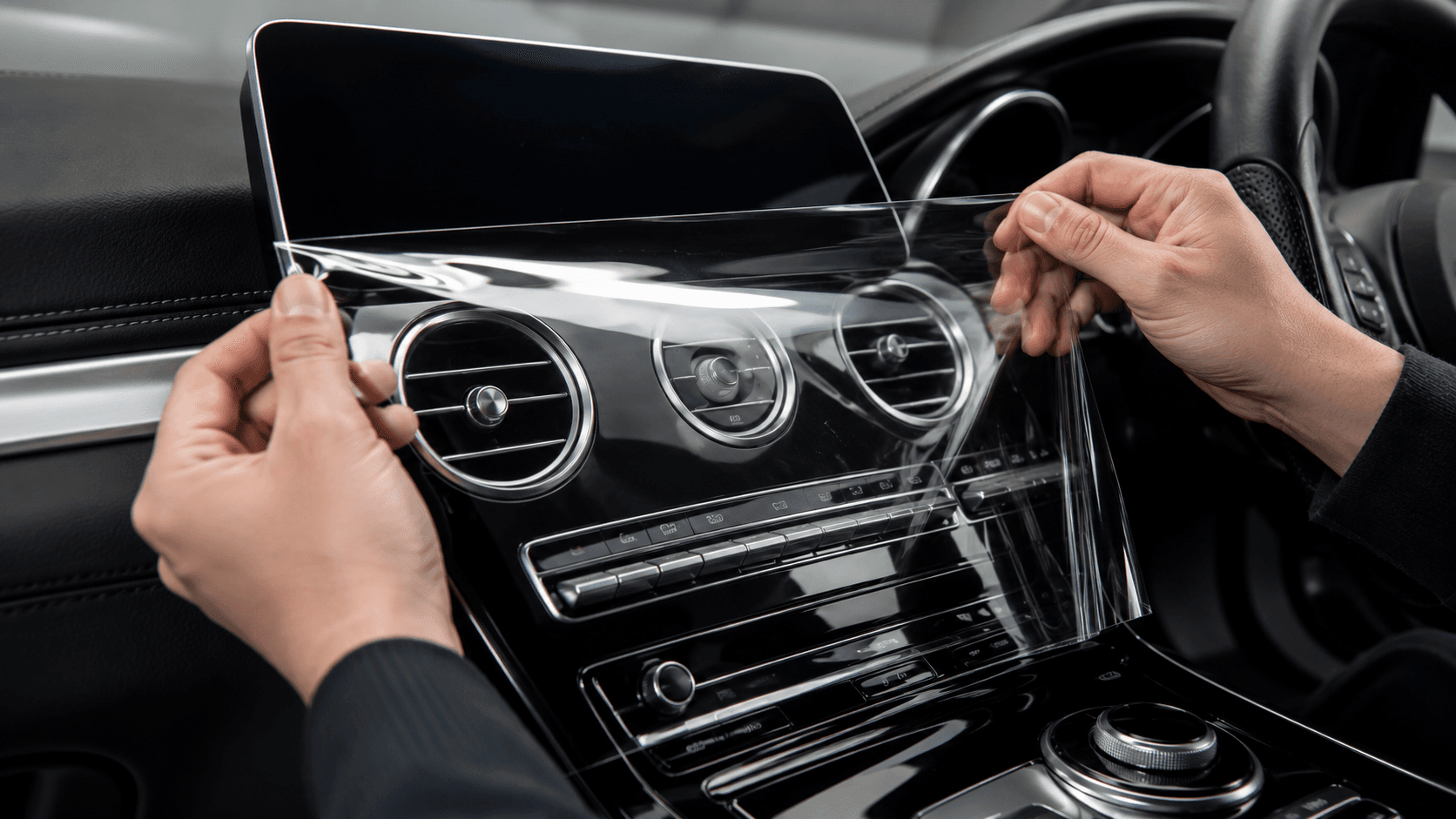
Interior PPF and a touchscreen guard get bought as if they're the same product. They aren't. One is a thick, self-healing TPU film built for curved, glossy trim — centre consoles, AC panels, gear surrounds, door inlays. The other is a thin, hard-coated PET film built for flat displays — infotainment screens, digital clusters. Put the wrong one on the wrong surface and it either won't survive daily handling, or it'll dull your screen's touch response.
What Interior PPF Actually Protects Against
Interior PPF's job is narrow and specific: it takes the daily scuffing from keys, rings, watches and knuckles so the glossy trim underneath doesn't dull, swirl, or scratch first. Good TPU film self-heals light marks with warmth — sunlight through the windshield is usually enough. What it won't do: stop a keychain jammed hard into the console, or make five-year-old trim look factory-new again. The honest promise is "fewer fine scratches, longer-lasting shine" — not "scratch-proof forever."
TPU vs. PET — The Material Difference That Actually Matters
Interior Pre-Cut PPF (TPU)
Thicker, self-healing, built for curved glossy surfaces. Aliphatic-grade TPU — the same film chemistry used on exterior PPF — resists yellowing and UV degradation far better than cheaper aromatic TPU. This is what belongs on piano-black consoles, AC panels, and door trim.
Touchscreen Guard (PET)
Thinner, hard-coated, not self-healing, but optically clearer and built to preserve touch sensitivity. This is what belongs on your infotainment display and digital cluster — never TPU film, which is too thick to keep your screen responsive.
If a seller just calls both of these "PPF" without naming the material, that's worth asking about before you buy.
How Self-Install Actually Works
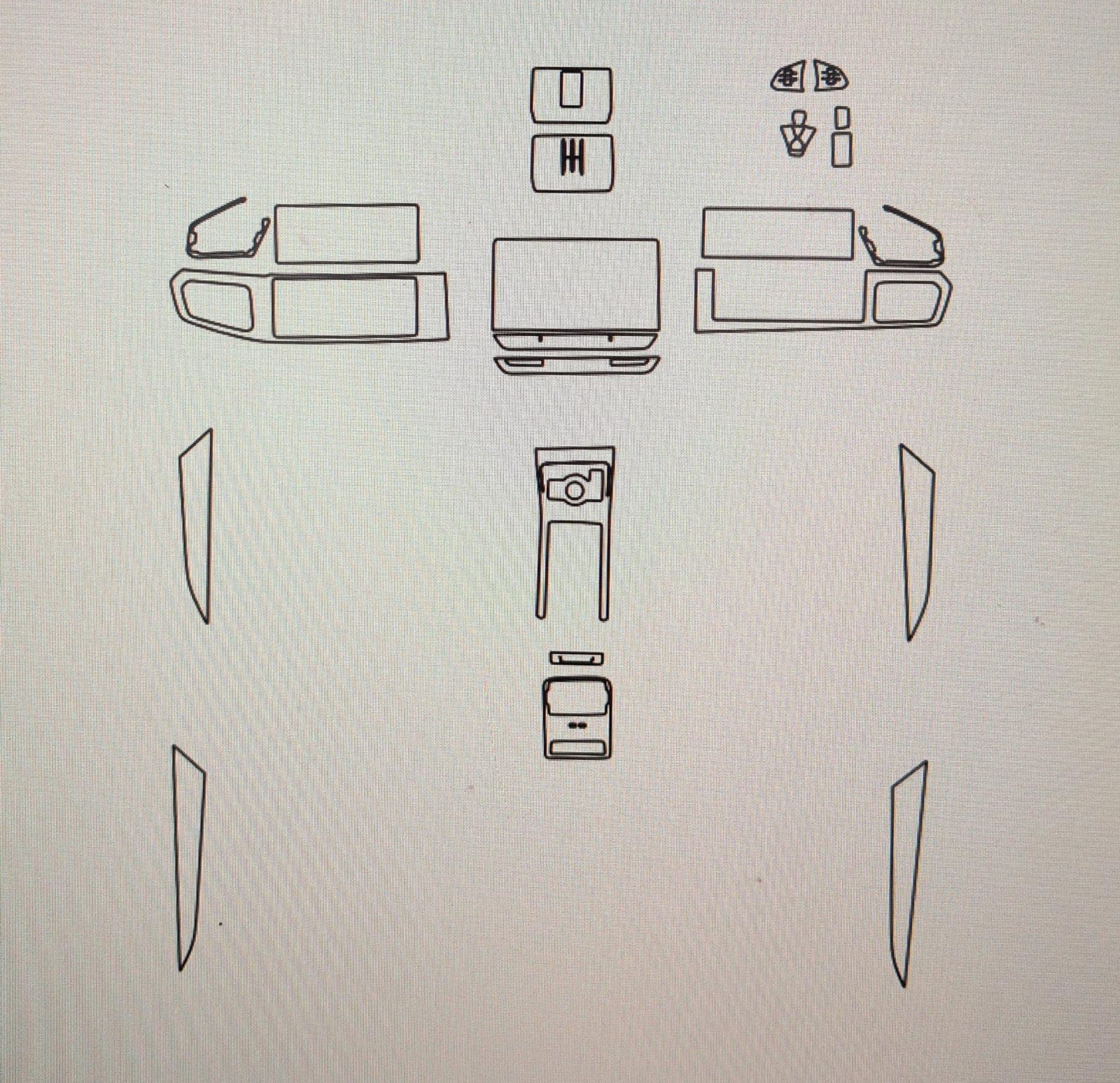
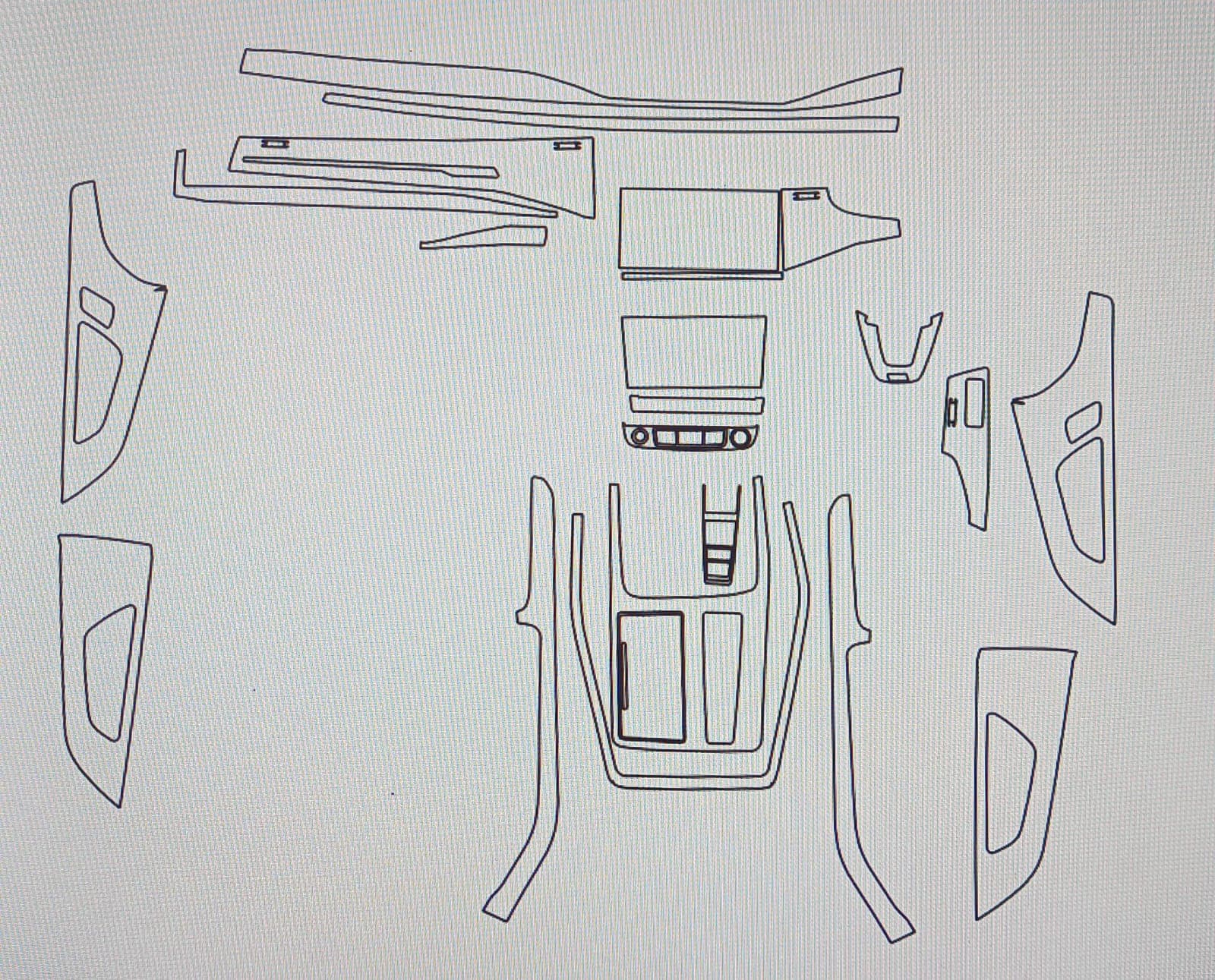
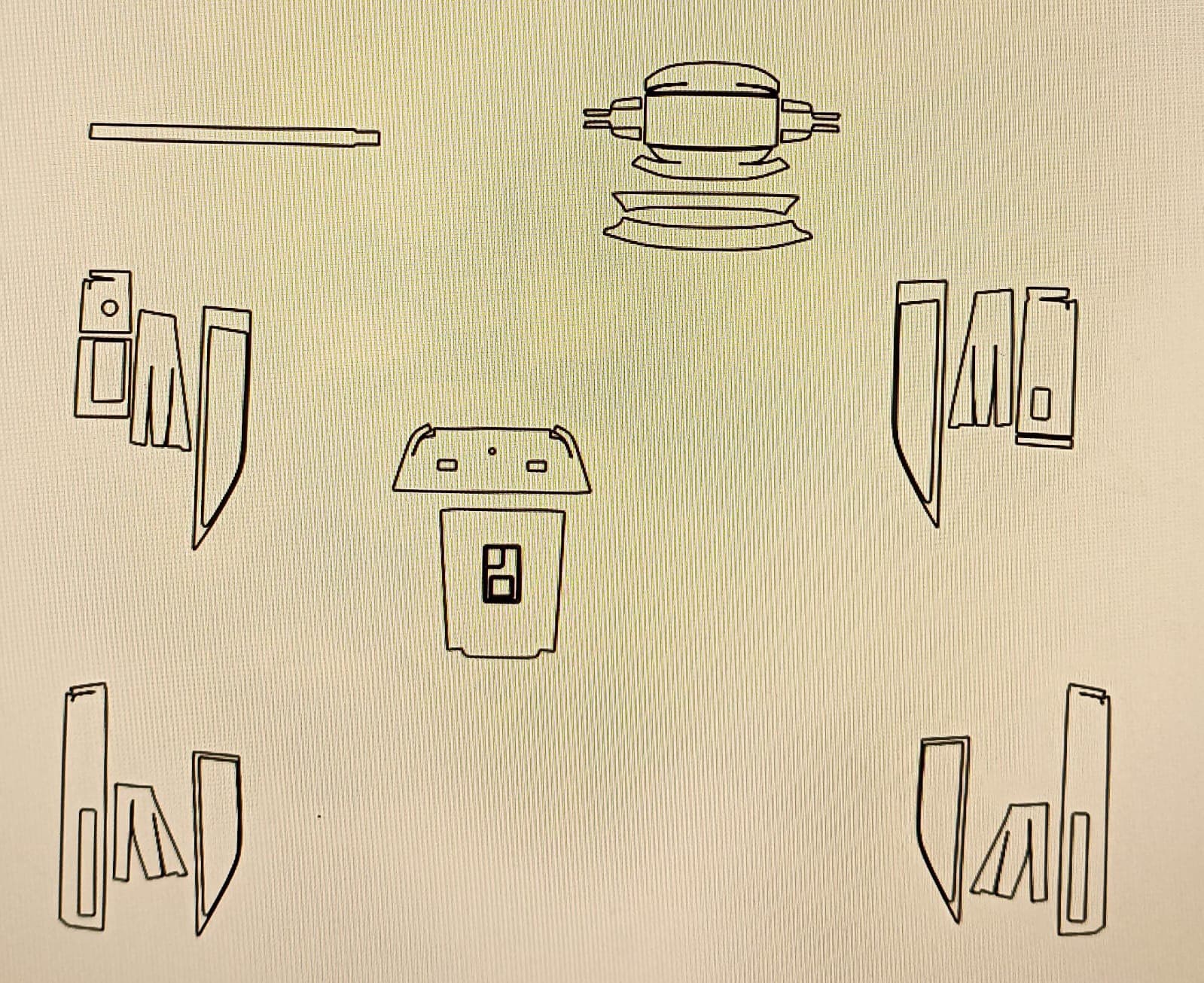
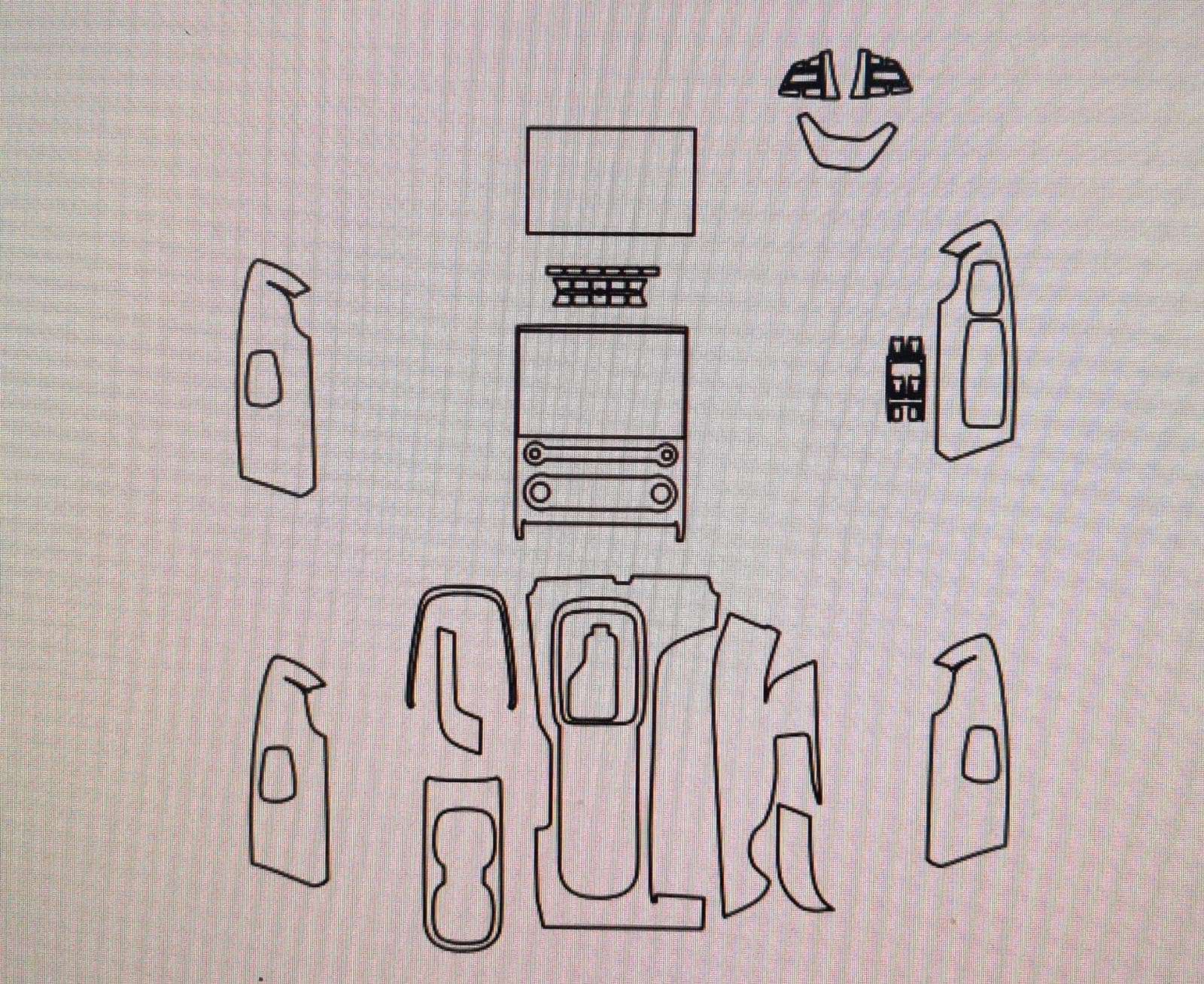
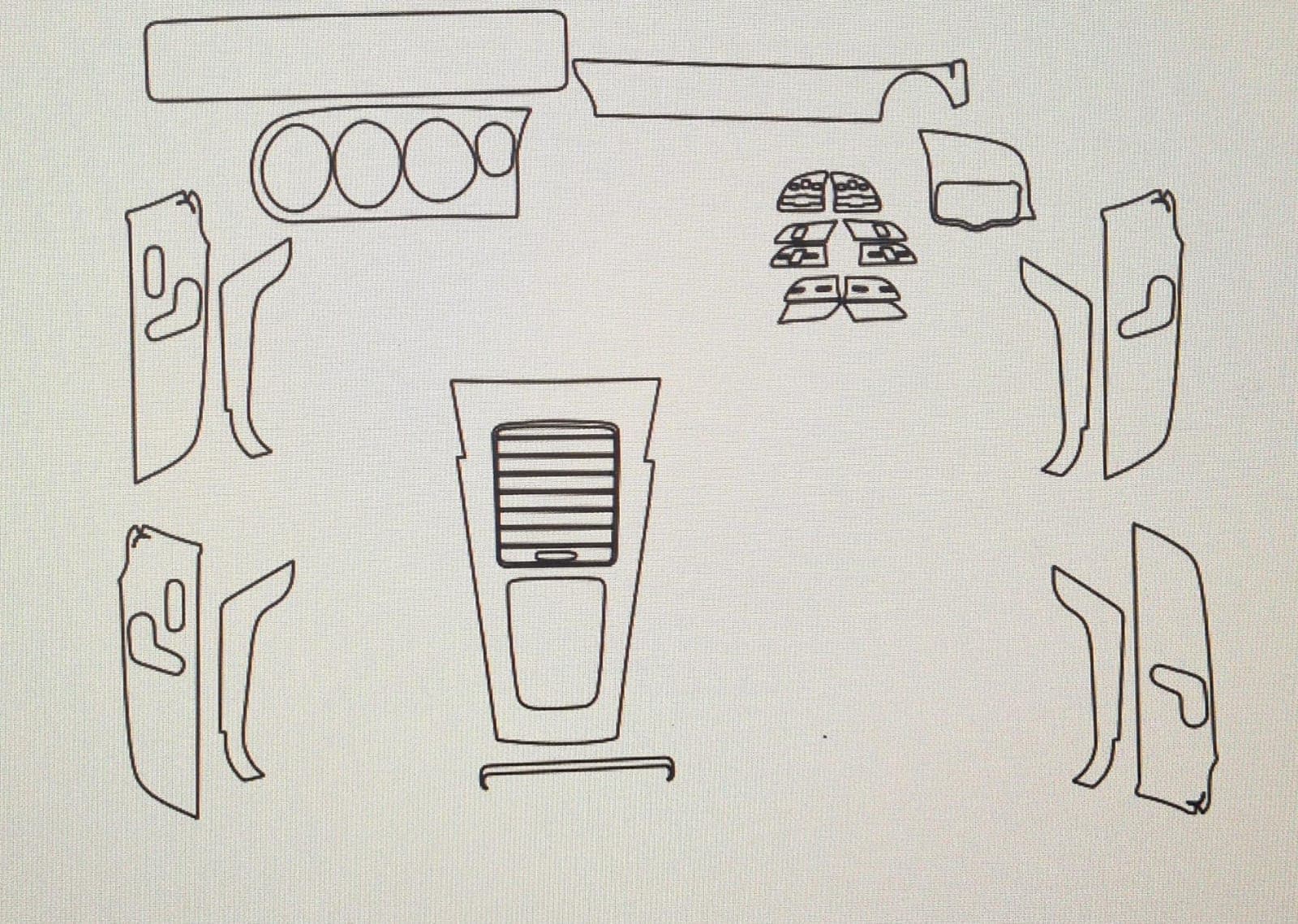
Every panel is pre-cut and labelled for your exact model, variant and year — there's no cutting or trimming on the car. The process:
- Clean the panel thoroughly, removing any polish or dressing residue
- Dry-fit the labelled piece first, before peeling any backing
- Peel only part of the backing, anchor one edge, then work across slowly
- Never touch the adhesive side with bare fingers, and never stretch an exact-fit piece over a curve
Give the panel a couple of days before wiping it with anything stronger than a dry microfiber — the adhesion at the edges needs time to fully set.
What a Proper Interior PPF Kit Should Include
Precision is the whole point of pre-cut film — a badly patterned kit means visible gaps, lifted edges, or a piece that doesn't sit flush on a curve. A kit worth buying should give you: pieces cut to your exact variant (not a generic "sedan" template), the material honestly labelled as TPU or PET, and the applicator tools — squeegee, wipes — included rather than assumed.
What Interior PPF Costs in India
Pricing runs in three rough tiers: standalone display guards typically start around ₹200–400, individual pre-cut trim pieces (steering wheel, AC vents, gear surround) run roughly ₹400–1,500 depending on panel size, and full-cabin pre-cut kits span about ₹6,000–14,000 — mass-market cars at the low end, premium and luxury vehicles at the top. For comparison, full exterior PPF installation in India typically runs ₹20,000–2,50,000+. That gap is exactly why interior PPF works as a lower-commitment, lower-regret first step into protecting a new car.
PMD's interior PPF kits are sourced directly from Tint & Orange, the same Hyderabad-based manufacturer supplying this category across India — priced transparently, with no installation service bundled in.
Why This Matters More on Newer Cars
Cabins are getting glossier and more screen-dependent every year. Alternative-fuel and electric passenger vehicles — which lean hardest into large touchscreens and haptic panels — made up over 40% of India's passenger vehicle retail share as of June 2026. More glass, more gloss, more touch surfaces per cabin means more panels that benefit from a protective layer before the first scratch happens.
Frequently Asked Questions
Is interior PPF the same as a touchscreen guard?
No. Interior PPF is a thicker, self-healing TPU film for curved glossy trim. A touchscreen guard is a thin, hard-coated PET film for flat displays. They're sold and applied separately.
Will interior PPF stop every scratch?
No. It reduces fine scratches, swirl marks, and daily wear — it isn't gouge-proof or indestructible.
Can I install interior PPF myself?
Yes. Pre-cut, labelled kits are built for self-install with no special tools beyond the included squeegee and wipes — or hand it to any local applicator.
Does my touchscreen need interior PPF or a screen guard?
A screen guard. Interior PPF is too thick for a touch display and will affect responsiveness — use PET film on the screen and TPU film everywhere else.
How long does interior PPF last?
It depends on the film quality and how the panel is handled day to day — check the specific manufacturer's warranty terms on the product page rather than assuming a universal number.
The Bottom Line
If the surface is glossy and curved — console, AC panel, door trim — use interior pre-cut PPF (TPU). If it's your touchscreen or digital cluster, use a screen guard (PET). Most cars need both, and they should be sold as separate labelled pieces cut for your exact model and variant.
https://plushmydrive.com/interior-ppf - Browse Interior PPF kits for your car
Related Products