What Is PMD Index? How PlushMyDrive Rates PPF and Sun Film Quality
PMD Index is PlushMyDrive's independent 0–10 rating for PPF and sun film, built entirely from a brand's own published data. Here's how it works, what it measures, and why an undisclosed spec counts against a score.
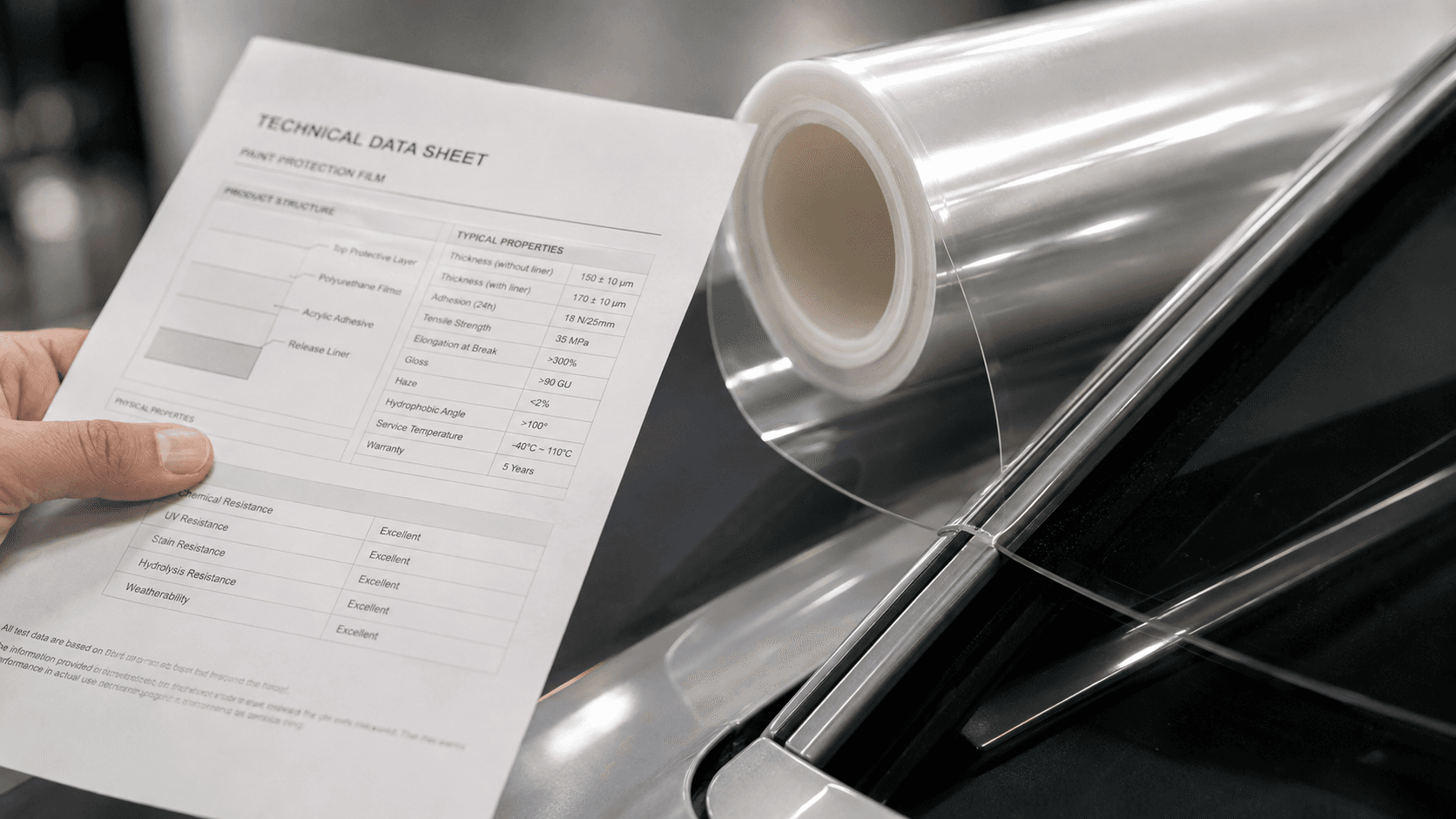
PMD Index is PlushMyDrive’s independent 0–10 rating for Paint Protection Film and Sun Film, calculated entirely from a brand’s own published technical data sheets, catalogs, and warranty documents — never from marketing copy. Every score links to its source document, so you can check it yourself in under a minute. No brand pays to be rated, and none can pay to score better.
The Problem: Stopped Being
Enough
Paint Protection Film has quietly become a commodity. A large share of what gets installed in India today is imported in bulk and sold under a local shop’s own name — and it’s marketed almost entirely on three numbers that require zero lab testing to print on a brochure.
- Thickness, in microns. Two films at the same 200 microns can still perform completely differently — thickness alone says nothing about tensile strength or how the film holds up over years of stone chips.
- Warranty, in years. A film genuinely built to spec lasts for years regardless of what’s printed on the warranty card. A long warranty number is easy to promise — it’s a commitment, not a lab result.
- A material name, like "TPU." Almost every PPF sold today is some form of TPU. The chemistry grade behind that name — aliphatic versus aromatic, whether it’s actually been through an accelerated-weathering test — is what determines whether a film yellows within two years or holds up for ten. That’s exactly the part most brochures leave out.
Genuine isn’t the same as good. Being an authentic, non-counterfeit product is table stakes. Whether that genuine product is actually well built is a completely separate question — and until now, nobody was answering it independently.
The Three Rules Behind Every Score
- Published data only, never marketing copy. PMD Index doesn’t run its own lab tests. It reads a brand’s own technical data sheets, catalogs, and warranty documents, and scores what’s already there.
- One rubric for everyone. A ₹4,000 sun film and an ₹18,000 PPF roll get graded on the exact same categories. A global brand is scored no more leniently than a local importer. There is no paid placement anywhere in PMD Index.
- Silence counts against the score — it’s never neutral. If a spec simply isn’t disclosed anywhere PMD can find, that isn’t treated as "unknown, skip it." It’s scored the same as a disclosed bad result.
Here’s why that third rule has to be true: if a missing spec were just excluded from the calculation, a brand that hides a weak number would score higher than a brand that honestly publishes one. Staying quiet would become the smarter strategy. Under PMD Index, it never is — silence counts against a brand, not for it.
How a Score Actually Gets Built
Before any number is scored, every value pulled from a document is graded on how well the brand backed it up. This is the step most product comparisons skip entirely — they treat a lab-certified number and a brochure claim as if they were the same thing. PMD Index does not.
- Verified: the brand states the number and cites a named test standard alongside it. This is the only tier that counts as proof.
- Brand-stated: a real number, published by the brand, with no test standard behind it. It’s shown — but it counts for less.
- Not disclosed: the spec couldn’t be found in any document the brand has published. It counts against the score.
Picture a film we’ll call Product X. Its technical data sheet states a tensile strength of 15 MPa, citing ASTM D882 — that’s Verified, because a named test standard backs the number. The same sheet also describes the adhesive as a "pressure-sensitive acrylic adhesive" with no named commercial supplier — that’s Brand-stated: a real claim, but with nothing behind it to check. And nowhere in any document PMD could find does the brand mention an accelerated-weathering test result — so that category shows as Not disclosed, and it counts against Product X’s final score exactly as if the brand had published a bad result.
That’s the entire mechanism: three tiers, applied consistently, to every product, every time.

What PMD Index Actually Measures
For Paint Protection Film
PPF sits on the outside of a car and has to survive years of sun, stone chips, and chemical exposure — so the rubric is weighted toward what actually causes real-world failures, not what looks impressive in a brochure.
- Mechanical Performance (heaviest): tensile strength, elongation at break, and gloss — whether the film resists stone chips, wraps around curves without tearing, and looks the way it should.
- Chemistry & UV Weathering (heaviest): aliphatic vs. aromatic TPU chemistry and cited accelerated-weathering results — the single biggest predictor of whether a film yellows in Indian sun, and the spec brands are quietest about.
- Adhesive & Removal Safety (major): peel/adhesion strength and whether a named commercial adhesive supplier is disclosed — an unproven adhesive can pull paint off the car when the film is removed years later.
- Functional Durability (supporting): self-healing type, cited stone-chip testing, and hydrophobic behavior — the everyday behavior you actually notice.
- Thickness Fit-to-Optimum (supporting): total thickness measured against the industry-consensus optimum — thicker isn’t automatically better.
- Warranty Transparency (minor): stated coverage length — a confidence signal, not a lab result, so it carries the least weight of any category.
The tests behind these categories are public industry standards, not PMD’s own invention: ASTM D882 for tensile strength and elongation, FTM 01 for peel/adhesion strength, ASTM G154 / G155 for accelerated UV weathering, and SAE J400 for stone-chip resistance.
For Sun Films
Sun film is a physically different product with different failure modes, so it has its own dedicated rubric rather than a reused one. There’s no exterior-weathering risk on glass film the way there is on exterior PPF — construction type drives almost everything, so it carries the most weight here.
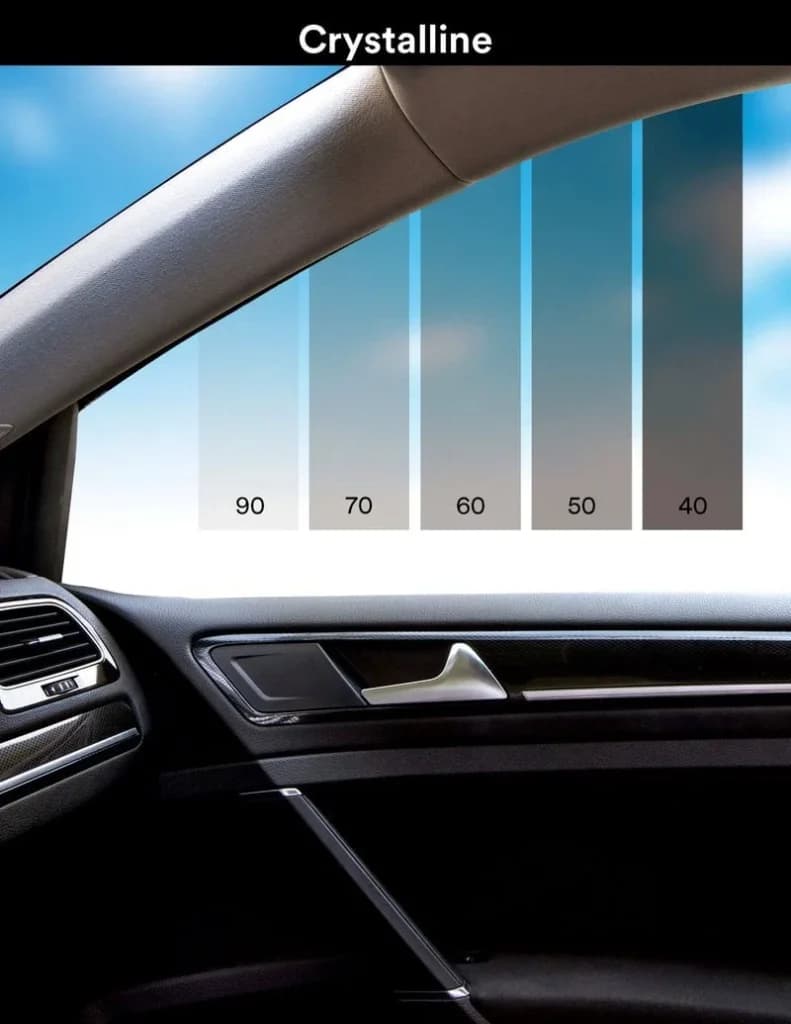
- Film Technology (heaviest): construction type — Dyed, Metallic, Hybrid Ceramic, Carbon, Nano-Ceramic, or Multi-Layer Optical (Crystalline). What the film is physically built from determines almost everything else about how it performs.
- Total Solar Energy Rejected — TSER (major): the honest heat-rejection number — unlike IRR, it accounts for the full solar spectrum, not just infrared.
- Glare Reduction (supporting): relevant to driving into low sun or oncoming headlights at night.
- Infrared Rejection — IRR (supporting): the heat you physically feel on your skin through the glass.
- Interior Reflection (minor): high reflectance causes dashboard glare and a mirror-like effect on the car’s own windows after dark.
- Signal Safety (minor): whether the film interferes with GPS, FASTag, or mobile signal — a pass/fail fact about metallic-film construction, not a lab measurement.
- UV Rejection (minor): weighted lightest because almost every real film on the market now clears 99%.
One nuance worth knowing: heat and glare are only ever compared within the same darkness (VLT) tier. A darker film always blocks more heat than a lighter one regardless of construction quality, so ranking a 20%-VLT privacy film against a 70%-VLT windshield film on raw heat-rejection would just be measuring darkness, not quality. VLT itself is never scored — a dark film isn’t worse than a light one, it’s built for a different job.
What PMD Doesn’t Publish, and Why
PMD Index always shows every spec it measures, why each one matters, the credibility grade behind every value, and a link to every source document — openable and checkable by anyone. What stays closed is the exact weighting formula: the precise thresholds that separate one score band from another, and the exact multiplier applied to a "Brand-stated" value versus a "Verified" one.
If a brand knew the exact cut-offs, it could disclose the bare minimum needed to clear them and stay quiet on everything else — which would defeat the entire point of the Index. Keeping the exact formula closed is what keeps the score honest.
What PMD Index Is Not
- It’s not PMD’s own laboratory testing. PMD reads what brands have already published, grades how well they backed it up, and links the source. Where a brand cites a real test standard, that’s the brand’s test.
- A low score isn’t automatically "a bad product." It can just as easily mean a brand discloses very little. The product page always shows both the score and the % verified, so you can tell the difference.
- It doesn’t rate the installer. Even an excellent film fails if it’s fitted badly. PMD Index rates the material only.
- It isn’t final or frozen. Scores update whenever a brand publishes new data, or PMD obtains a document it didn’t previously have.

Try It Yourself — Even on a Quote From Somewhere Else
PMD Index isn’t limited to products sold on PlushMyDrive. The Free Spec Check tool lets anyone upload a spec sheet, quote, or catalogue from any seller — PDF, Word, Excel, or even a photo — and get an instant PMD Index reading, free, whether or not you ever buy from PMD. It automatically detects whether the document is about PPF or Sun Film and runs it through the exact same rubric described above.
Worth knowing before you use it: this reading is generated automatically by AI from the document you upload, and it can get things wrong. Treat it as a fast, indicative first read, not a certified lab result. A low or excluded score means a claim couldn’t be verified against what PMD Index currently measures — not that the product is necessarily bad.

The Verdict
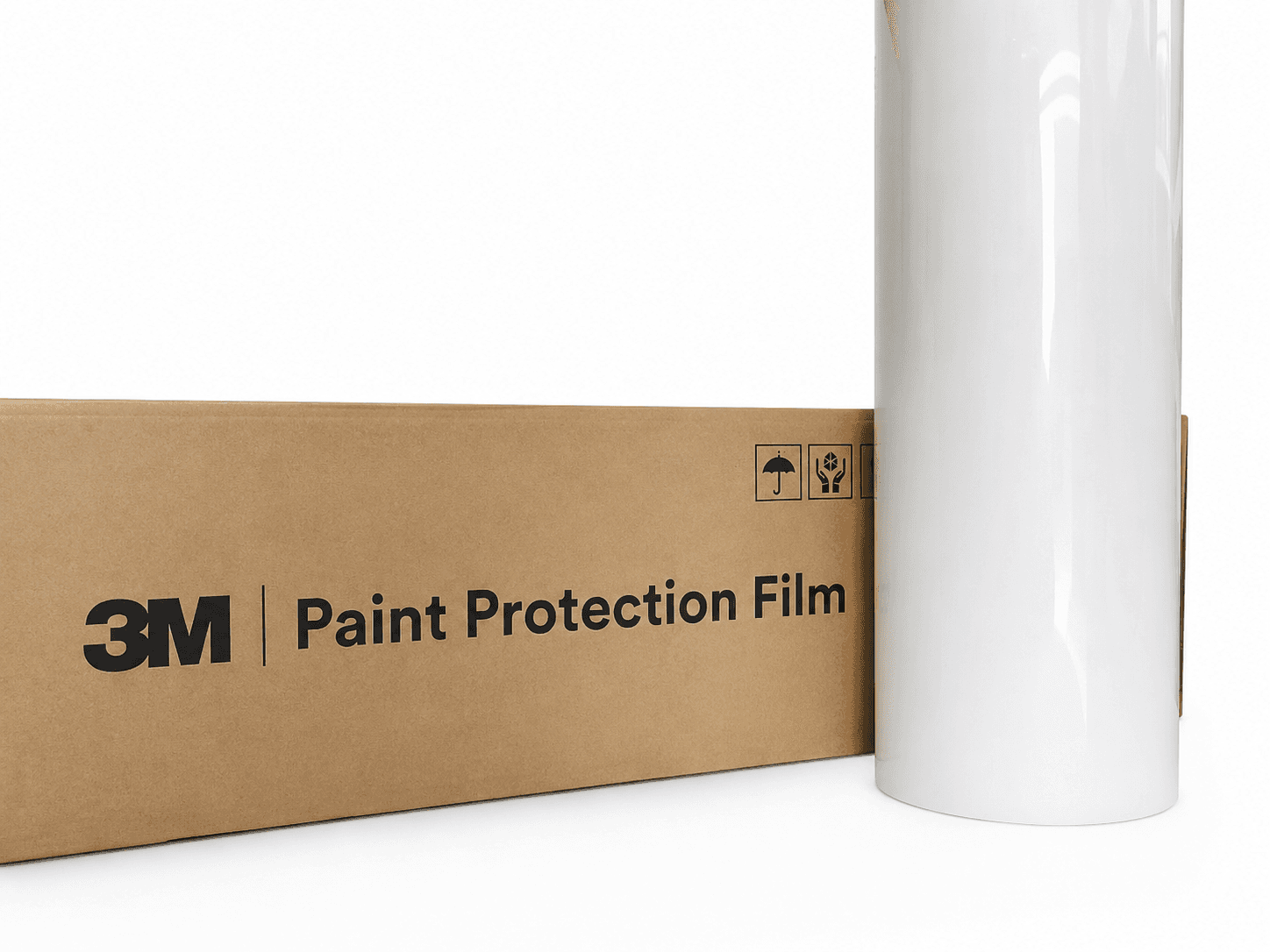
Anyone can call a product genuine. PMD Index checks what a brand can actually prove — and says so plainly when it can’t. The next time you’re looking at a PPF or sun film quote, from PMD or anywhere else, ask for the data sheet, not the sales pitch. You can see how the full methodology works, or check a real, currently-rated 3M PPF product and 3M Crystalline sun film to see a live score in action.
Frequently Asked Questions
What is PMD Index?
PMD Index is PlushMyDrive’s independent 0–10 rating for paint protection film and sun film. Every score is calculated from the brand’s own published technical data sheets, catalogs, and warranty documents — never from marketing copy — and every source document is linked on the product page so a customer can verify it.
How is PMD Index calculated?
Each product is scored across weighted categories — for PPF: mechanical performance, chemistry and UV weathering, adhesive and removal safety, functional durability, thickness fit, and warranty transparency. For sun films: film technology, TSER, glare reduction, infrared rejection, interior reflection, signal safety, and UV rejection. Each captured value is also graded for credibility: a figure with a named test standard counts fully, a bare brand claim counts for less, and an undisclosed spec counts against the score. The exact weighting formula is proprietary.
Why does an undisclosed spec lower a PMD Index score?
Because otherwise silence would be rewarded. If undisclosed specs were simply skipped, a brand that hides a weak result would outscore a brand that publishes an honest one. Under PMD Index, an undisclosed critical spec is scored the same as a disclosed-bad one, so staying quiet is never an advantage.
Do brands pay to be listed or rated on PMD Index?
No. There is no paid placement in PMD Index. Every product is scored against the same rubric, and a global brand is scored no more leniently than a local importer.
Related Products